Search This Blog

Tuesday, May 29, 2018

តើគួរហៅអ្នកកាន់សាសនាឥស្លាមនៅកម្ពុជាថា "ខ្មែរឥស្លាម" ឬ "[ខ្មែរ]មូស្លីម"?


          មហាជនជាច្រើននៅក្នុងសង្គមកម្ពុជាហាក់នៅមានភាពស្រពិចស្រពិលនិងវែកញែកមិនទាន់ច្បាស់លាស់ក្នុងការប្រើប្រាស់ពាក្យ “ខ្មែរឥស្លាម” នៅពេល​ដែលពួកគាត់ចង់សំដៅលើជនដែលកាន់សាសនាឥស្លាមនៅកម្ពុជារាប់ទាំងជនជាតិចាមនិងជនជាតិខ្មែរ។ មានមនុស្សមិនតិចទេក្នុងនោះរួមមានស្ថាប័នពត៌មាន អ្នកសារពត៌មាន អ្នកប្រើប្រាស់បណ្តាញសង្គម និងអ្នកមានចំណេះដឹងមួយចំនួនបាននឹងកំពុងប្រើប្រាស់និងយល់ខុសពីអត្ថន័យនៃពាក្យ “ខ្មែរឥស្លាម” ត្បិតប្រហែលជាពួកគាត់មិនទាន់ឃើញមានអ្នកបកស្រាយទៅលើរឿងនេះក៏អាចថាបាន។

         បើយើងនិយាយពីភាពឡូហ្សិច ការប្រើប្រាស់ពាក្យ “ខ្មែរឥស្លាម” ហាក់មិនទាន់មានភាពត្រឹមត្រូវនោះទេ ត្បិត ពាក្សថា “ខ្មែរ” គឺសំដៅលើជនជាតិមួយ ចំណែកឯពាក្យ “ឥស្លាម” គឺសំដៅលើសាសនាមួយ។ អ៊ីចឹង យើងមិនគួភ្ជាប់ជនជាតិមួយទៅនឹងសាសានាមួយនោះទេ គ្រាន់ចង់សំដៅល់បគ្គុលណាម្នាក់ដែលកាន់សាសនាជាក់លាក់ណាមួយ។ ឧទាហរណ៍ថាមានបគ្គុលម្នាក់ដែលជាជនជាតិខ្មែរហើយគោរពព្រះពុទ្ធសាសនា ជាសាសនារបស់ខ្លួននោះ យើងមិនគួហៅគាត់ថាជា “ខ្មែរព្រះពុទ្ធសាសនា”​ នោះទេ នៅពេលយើងចង់សំដៅដល់បគ្គុលនោះជាអ្នកគោរពព្រះពុទ្ធសាសនា ត្បិតវាមានភាពឆ្គាំឆ្គង។ នៅក្នុងន័យនេះយើងអាចហៅគាត់ថា “ពុទ្ធសាសនិក​ (ខ្មែរ?)” ត្បិតយើងគ្រាន់ចង់បញ្ជាក់ថាគាត់ជាជនខ្មែរហើយកាន់សាសនាព្រះពុទ្ធ។ ដូចគ្នានេះ យើងអាចហៅជនជាតិខ្មែរដែលកាន់សាសនាឥស្លាមថាជា “ខ្មែរមូស្លីម” ប៉ុន្តែមិនមែនជា “ខ្មែរឥស្លាម” បើយើងនិយាយតែពីជនជាតិខ្មែរកាន់សាស​នាឥស្លាម​។​

         នៅពេលដែលយើងហៅអ្នកកាន់សាសនាឥស្លាមនៅកម្ពុជាទាំងអស់ថាជា “ខ្មែរឥស្លាម”​ វាហាក់បង្ហាញថា យើងចង់លំបាត់ជនជាតិចាមដែលជាអ្នកកាន់សាសនាឥស្លាមមានចំនួនភាគច្រើនចោល។​ ជំនួសមកវិញ​ យើងអាចហៅគាត់ថាជា ចាមមូស្លីម​ ឬត្រឹមតែ(ជនជាតិ)ចាមក៏បាន។

​​​​​​         ពាក្យ “ខ្មែរឥស្លាម” ត្រូវបានលឺគេហៅចាប់តាំងពីទសវត្សរ៍ឆ្នាំ ៦០ ក្នុងរបបសង្គមរាស្រ្តនិយមដែលដឹកនាំដោយសម្តេចព្រះ​នរោត្តម សីហនុ។

         ស្មេរសង្ឃឹមយ៉ាង​មុតមាំថា នឹងឈប់មានការយល់ច្រឡំក្នុងការហៅ អ្នកកាន់សាសនាឥស្លាមនៅកម្ពុជារួមទាំងជនជាតិខ្មែរឬជនជាតិចាមជា “ខ្មែរឥស្លាម” តទៅទៀត៕

Sunday, January 21, 2018

Young Kouy man is the author of his own destiny

By: Zahron Sokry
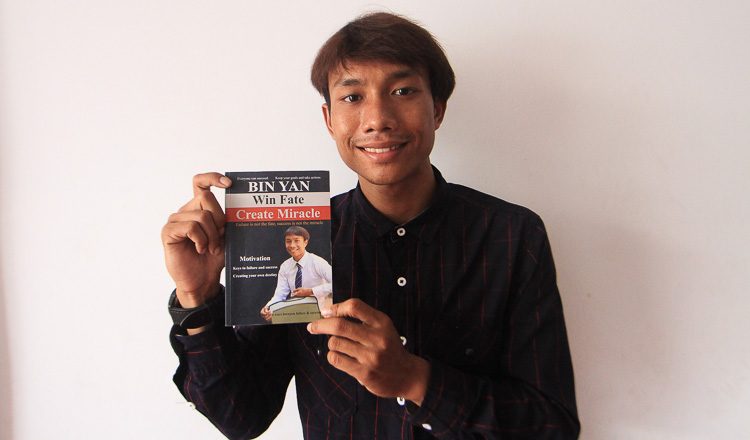
Bin Yan wrote a book named Win Fate, Create Miracle.
Coming from the humblest of backgrounds, Bin Yan, a member of the Kouy minority from Stung Treng province’s Thala Borivath district, has written a book in English to inspire young people who faced similar hardships to his own.
Smiling as he spoke, the 26-year-old said he spent a year writing “Win Fate, Create Miracle” to show foreigners that while he is not a native English-speaker, he can write sufficiently well for foreigners to read about his life.
“I wrote ‘Win Fate, Create Miracle’ because I have been through many obstacles in life,” Mr Yan said, adding that he wants to inspire youth, especially undergraduates and high school students, to keep at their studies, and to share some of his ideas about life with them.
Mr Yan said he had observed that some students lacked clear goals, so he hoped his book would help guide and motivate them not to give up on whatever tasks they set for themselves.
“Additionally, I wrote it because I wanted to improve my English and to show foreigners that Cambodian youth can write in English.”
He wrote the book with help from his friends and teachers, including a foreigner. Its contents are based 60 percent from his life; the rest are gleaned from the experiences of others, mostly successful people and great world leaders.
Mr Yan said he has loved reading from a very young age. He gets inspiration from what he reads and says books help him to write his own material and to set clear and ambitious goals in life.
Talking about his struggle to get a good education and overcome ignorance when he was young and living in his home village, Yan said he was looked down on by his relatives and siblings, who told him he would never be successful at school and called him “stupid.”
Despite these discouraging remarks, Mr Yan knew he was bright because he always got the top score in class. He knew he was not cut out for farming because he lacked the strength to work all day in the hot sun.
He constantly told himself he was destined for bigger things and that when he grew up he would have to build on the preparations he had already made.
The smile disappeared from Mr Yan’s face as he mentioned that his mother died when he was 2, and that later his father left to marry another woman. His life has been filled with challenges ever since.
As a minority villager in the eastern part of the country, Mr Yan didn’t get access to school until he was almost 10.
“To attend school, I had to walk 7 kilometers each way from Grade 3 until Grade 6,” he said, adding that he had to cross streams and canals, especially when it was raining.
“Sometimes I walked barefoot,” Mr Yan said, adding that although he has encountered countless difficulties in his life, he has never given up on his studies.
Mr Yan said his biggest motivation came from his primary school teacher, who was the only person who encouraged him.

Life on fishing boats for Cham Muslims in Phnom Penh is a cycle of poverty.

By: Zahron Sokry


The scene on the riverside near a five-star hotel opposite the Royal Palace in Phnom Penh is picturesque, with hundreds of fishing boats lining the bank, but life is hard for the poor Cham ethnic community which lives on the vessels.
Sitting on the ground not far from her boat with her fellow fishermen and women, a 52-year-old widow said in more than three decades on the boat her life had become worse and worse after losing her beloved husband almost 20 years ago.
Mat Slamah, one of thousands of poor Cham Muslim people living on the boats, said there were no words to describe how hard her life was without land or a proper home.
Speaking in a low tone, Ms Slamah admitted that she had borrowed money from a loan shark at a high interest rate to buy fishing gear.
Since becoming the breadwinner of her family of five who have lived on the boat since birth, Ms Slamah has failed to overcome the constant hardship and poverty.
“Sometimes I cannot endure this severe hardship and handle it smoothly,” she said. “If I have just a small plot of land, I could build a hut to live in and do something. I think it might be better than this.”
Despite knowing the loans they get are at interest rates not allowed under Islamic law, Ms Slamah and some other fishermen have no choice but to take the money because of their severe financial hardship.
Fellow fisherman Nes Ly appeared to be annoyed when being asked about taking out loans. Mr Ly seemed reluctant to answer questions on a personal issue which people considered a secret.
Standing opposite the Sokha Hotel ferry, the 54-year-old turned his face toward his fishing boat and said in a low voice that he and his wife had taken loans from a moneylender at 10 percent monthly interest for daily expenses because fishing was banned in this season.
“This year is more difficult than previous years, since I cannot find fish even for my family to cook,” he said. “It is not because of the ban by fishery officers; I think that there is not much fish left in the water.”
Fisherman Math Yousof, 42, said that from June to November, most fishermen earn nothing.
Their difficulties are not only financial. They face anxious times on their boats when there are rainstorms and big waves, especially at night, he said.
“I stay awake, keep myself vigilant and let the children sleep,” he said. “When there is strong wind with heavy rain, they also get wet, as my boat is small and I have six children staying with me.”
“It is very hard to live as a fisherman with nothing besides a small boat,” he added.
His family situation was terrible because his wife fell ill and he had no money to bring her to hospital.
As her condition worsened he decided to take a loan from a moneylender to take her to hospital for treatment.
Community representative Y Yousof said his community had 250 families but only 66 families were under his legal control.
“I cannot leave them behind and live a better life alone. I have to help them because they are also my brothers and sisters in faith,” he said.
The 66 families have better livelihoods and they take no loans from any institutions, he claimed.
He acknowledged that some families in his community took loans from moneylenders for daily expenses but he did not know the exact number since they were not under his legal control.
“Taking loans is a secret and a personal issue, so they do not report it to me because they may feel timid telling me that they take loans from moneylenders for daily expenses,” he said.
Few families told him about the loans, and they knew it was prohibited under Islamic law.
A fisherman since the age of seven, Mr Yousof said the condition of people in his community was one of poverty because the work was seasonal.
About 50 out of 250 families in the community lived in extreme poverty and were in an even worse situation when they could not go fishing, he said.
Most fishermen living around the riverside heavily rely on aid during the period when they cannot catch fish.
Mr Yousof, 57, called on the government and NGOs to help his community.
He said he received aid from Red Cross Cambodia once, about a month before the commune elections.
“The Red Cross Cambodia granted me 1,240 family aid packages, but I took only 250 for the families of people living here, and the rest I gave to other communities,” he said.
The aid from Red Cross Cambodia was just a temporary solution for people in his community, and they still suffer hardship, he said.
He said his community could get massive help from Islamic NGOs and Malaysian Muslim people during Ramadan, the holy fasting month in Islam.
Ms Slamah said she could fast happily during Ramadan because she got some help from donors.“Even though I cannot earn anything in the month of Ramadan, I am not facing difficulty like I am now. I am grateful to receive the help,” she said.
She asked donors to continue helping people in the community.
Mr Yousof would like the government to grant his people plots of land to create a village, build a mosque and a school for children.
He said he and the people in his community could live in huts and plant crops if they had a plot of land. Life could be easier if they got off the boats, he said.

See also in Khmer Time: http://www.khmertimeskh.com/5078751/cham-river-life-picture-perfect-poverty/ 

Thursday, December 28, 2017

Hidden worship: The struggling to pray under KR

                               
By: Zahron Sokry

The worship to the God is one of the five main pillars in Islam, and every single Muslim has to pray five times a day. However, Cham Muslim could not fulfill this obligatory properly during the Khmer Rouge regime, since every religion was prohibited to practice. Cham Muslim in Khpob II village in now Tboung Khmum province struggled to pray despite the prohibition.

Before the dawn break about 4:45 a.m., the sound of calling people for Morning Prayer can be heard in an ethnic Cham Muslim village called Khpob II village. This village is about an hour far away from Soung city by riding motorbike.

As the Mu'adhin, the caller to prayer finished the calling, many people start walking to pray in the mosque together. They gather to pray peacefully without any distraction in the mosque called Shahidan mosque. Unlike nowadays, Cham Muslim people living under Khmer Rouge regime could not go to pray in the mosque, where they have to worship to the God.
Ke Tiveou, a victim in Khmer Rouge regime.
Ke Tiveou could not fulfill her praying obligatory properly, and she had to pretend to be sleeping in order to pray. When she was in the field, she had to tell a liar and make an excuse in order to pray.

She said “First we could pray openly but it became harder and harder later on. They (the Pot Pot spy) did not allow to pray, but I was pretending to sleep in order to pray. When there was quiet, I sat down to pray, but when they came, I broke the pray and spoke with them.

She sometimes had nothing to eat and felt exhausted, but she rarely stopped worshipping to the God. In a painful expression on her face, she said she was afraid of The Khmer Rouge spy seeing her too, but saying she feared God the most.
"In this world, I was afraid of their mistreatment, but in the hereafter I fear the God only, not them.
Looking up to the roof, Tiveou continued recalling her memories in the Khmer Rouge regime. She said even though she could not fulfill the praying on time, she tried to make it for another time.
I secretly prayed with my mother when the time of praying came. When I could not pray the noon prayer, I made and combined it to with the next prayer. I did these things because I lived under their (Khmer Rouge) control. I was quite scared that if I found praying, I would result in death. Luckily, they never found me in praying.

During Khmer Rouge regime, every religion was prohibited to practice, since the Pol Pot considered all religion to be reactionary.

A witness of Khmer Rouge regime Sos Mohammad Nour said Khmer Rouge forbad him as well as other people in his village since 1973.

 “Pray! We could not pray at all. We hid to pray, pray in a sleeping manner, pray in the water.

Mohammad Nour claimed Khmer Rouge put more restrictions on Cham Muslims because of Koh Phal and Svay Klaing villages’ rebillions.

A former rebellion in Koh Phal village, Sos Sles who is 67 years of age recalled what had happened in his village back in Khmer Rouge regime. He said in Ramadan, the holy fasting month of Muslims, Khmer Rouge cadres called the villagers to gather in a meeting. It started in the afternoon and lasted until about 8 p.m. The villagers became angry, as they could not have the iftar, the breaking of fasting on time.

“The commotion started around 7 or 8 p.m. because they (the Pol Pot) caused us to have no iftar, and then we clashed with them. They ran away because it was a night time already.

A research at Documentation Center of Cambodia (DC-Cam) Ms. Farina So said prior to Khmer Rouge took the power from Khmer Republic’s Lon Nol, about 60% of the country was already controlled by Khmer Rouge since 1973. The areas controlled by Khmer Rouge were named liberated areas. Koh Phal village was in the liberated areas too, and Khmer Rouge started to implement their policies to smash the religion and the customs. And the protest also started.

 Before the mass protest started, Khmer Rouge started to smash Koh Phal village until 1975.

Isa Osman, a former research at DC-cam, stated in his book Oukoubah that “Khmer Rouge’s goal was to kill Cham, to have Cham erase their customs and tradition, shut down the mosque and forbad worship.

Mr. Osman said Khmer Rouge prohibited ethnic Cham not to speak their language, and forced them to consumed pork. Khmer Rouge also killed hakim, religious leaders, and Taun, religious teachers.
Those who faced arresting in Khpob II village were mostly educated people. Village chiefs or hakims were all arrested, as they were considered educated persons.

After hearing the arrest of her brother, Tiveou felt painful and thought that her brother would be tortured and executed to death. She could barely cry in pain of the arrest of her brother.

 “Even nowadays, I always want to cry when I think of my brother. I don’t know where he was killed, and where he was buried. I had not seen my brother, as he was escorted at nighttime. I could not do anything but cried at the home. They arrested him as he was hakim and village chief.


According to Mr. Kienan Ben, a historian, saying that only 20 out of 113 ethnic Cham hakim survived in 1979.

Tuesday, September 5, 2017

Striving to save Cham culture

September 1, 2017
By: Zahron Sokry

Few Cham people know how to read and write in their language, and even fewer are interested in learning about the legacy of their ancestors. But Leb Ke is different.
One of the leading Cham language and culture specialists in Cambodia, Mr Ke is working hard to preserve the Cham identity.
Faced with the challenge of encouraging young people to explore their heritage, Mr Ke has created Cham fonts for Android smartphone keyboards, hoping it will inspire a change in the way they communicate.
By the end of this year, he plans to publish a 2,500-word Cham to Khmer language glossary.
Mr Ke fears the value of the Cham identity is declining in communities, since Cham people do not understand their heritage and fail to educate themselves about it.
“Cham people should place more value on their own language and should carry out research regarding their alphabet, literature and culture,” Mr Ke said.
The 37-year-old has written six books on Cham literature for the Cultural Heritage of Cham Language organisation.
His team spent two years producing just one Cham language book, since there are few documents remaining on Cham culture.
Mr Ke admits that Cham people lack access to resources to carry out research, since most educated Cham people were killed during the Khmer Rouge era, while piles of important documents were destroyed.
He said elderly people at the time packed up and buried some documents in the ground to keep them safe, but most were damaged.
Mr Ke’s books have helped teach more than 3,000 young students in Cham communities to read and write, while about 20,000 people across the country are familiar with his work.
Cham people represent the core of Muslim communities in Cambodia, with more than 200,000 members of the ethnic group nationwide.
Mr Ke and his team have also introduced Cham language learning programmes to almost 20 communities, supported by the US Embassy in Phnom Penh.
“We want people to be able to read the Cham language and recognise the alphabet,” said Mr Ke, who hopes a young generation of Cham people will continue his work.
Mr Ke, who was born in a Cham community in Kampong Chhnang province, said there were no formal school classes for teaching Cham literature, but he learned to read and write the language with elderly people in his village when he was a boy.
“When I was young I went to listen to the older people in my village telling stories about Cham culture and history, and reciting beautiful poems about education and life. It made me more curious to know about my identity as a Cham person,” Mr Ke said.
That curiosity encouraged him to start collecting Cham books and materials.
He said the elders in his village always told him he must work hard if he wanted to preserve the identity of the Cham people.
He borrowed books about Cham culture and history from older people in his village to read and copy.
“I copied the books by hand, page by page, because I could not borrow them for long,” said Mr Ke, who has been able to read and write in Cham since the age of 12.
He noted the majority of Cham communities where people can still read and write are in Kampong Chhnang, Pursat, Battambang and Kratie provinces, with about 10 percent of Cham people in Cambodia being able to read the language.
“Some Cham people have abandoned their language now,” said Mr Ke, who one day hopes there will be a Cham language newspaper, warning the culture will fade away without strong action to preserve it.
“Literature helps make religions and cultures more beautiful,” added Mr Ke, who has travelled to several countries to give lectures about Cham identity.
He said many Cham people feel that being identified by their ethnic group is disrespectful, now preferring to be known as Khmer Muslims.
However Mr Ke argued that being Cham is separate to being Muslim.
Cham is an ethnicity not a religion, but people are confused when they hear the word Cham and think all Chams are Muslim, he said.
“It is nonsense when you call Cham people Khmer Muslims. Cham is Cham,” he said.
“If we embrace Islam, we should ask ourselves which ethnicity we are – Cham, Javan or Khmer.”
He argued that some Cham people unknowingly rid themselves of their identities by the way they dress and live their lives.
Mr Ke, whose name is not traditionally Cham, said Cham parents prefer to name their children in Malay or Arabic. Few Cham language names remain, other than nicknames.
“When the minority of parents do give their children a Cham name, others criticise and say the names are not beautiful. It shows that Cham language has been devalued,” he said.
He added he regrets the fact his parents called him an Arabic name as opposed to Cham.
Speaking at a lecture organised by the Buddhist Institute last month, Mr Ke said Cham families, particularly in cities, were often embarrassed to speak their language outside the home.
He called on Cham people to band together to save the language, vowing he would fight to save the culture until last breath.

Thursday, August 10, 2017

Two bombs found in sandpit

July 24, 2017
By: Zahron Sokry

The Cambodian Mine Action Centre yesterday removed two unexploded MK-82 bombs from a sandpit in Kandal province’s Kandal Steung district.
CMAC director-general Heng Ratana said five of his team members and local authorities worked together to remove the bombs after receiving a report of the discovery from local people.
“We have already transferred the bombs to a safe place and will defuse them later,” Mr Ratana said.
“CMAC has found more than 90 unexploded MK-82 bombs in the last year.”
From 1969 to 1973, the US dropped about 500,000 tonnes of explosives on Cambodian soil.
Earlier this month, Ly Thuch, secretary-general of the Cambodian Mine Action and Victim Assistance Authority, said the government wants to commit to being mine-free in 2025.
See original website: http://www.khmertimeskh.com/5074409/two-bombs-found-sandpit/

Ancient Buddha remnants found

August 9, 2017
By: Zahron Sokry

Remnants sandstone of Buddha statues
Four sandstone remnants of Buddha statues dating back to the Jayavarman VII era were discovered at an Angkor-era hospital site on Sunday in Siem Reap province.
Em Sok Rithy, deputy director of the International Centre of Research and Angkor Documents, said the remnants were discovered at the Tonle Sngout temple by a group of Apsara Authority archaeologists working with colleagues from the Singapore-based Institute of South-East Asian Studies.
“There are more remnants, but we have discovered only four so far,” he said, adding that the artefacts were buried about 30 centimetres under the ground.
Examinations of the remnants show that they are different pieces of statues, he said.
“We have placed them in the museum temporarily. They will be publicly displayed after we finish analysing and studying them,” he said.
Mr Sok Rithy added that among the remnants was one so-called medicine Buddha, which was being checked by specialists.
The archaeologists late last month also found a temple door guardian sandstone statue in the Bayon style from 1180 CE to 1230 CE.
See original website: http://www.khmertimeskh.com/5077329/ancient-buddha-remnants-found/

Medics add safety to circumcision

July 28, 2017
By: Zahron Sokry

Twenty-seven Cambodian Muslim medical volunteers, made up of six doctors and 21 nurses, have visited a Muslim community in Mondulkiri province to give free circumcisions to 100 boys.
The service was funded by Malaysia, Singapore and Arab countries, with the help of volunteer Nann Allavy.
“I go and collect boys from my community, most of them aged between four and 12, to be circumcised,” Mr Allavy explained.
He said he was happy to do the work because he could help orphans and many boys from low-income families, as well as rich ones.
Villager Ith Kai, whose six-year-old son was circumcised by the volunteers from the Association for Coordination and Social Development, said he was very pleased to have his child treated by a specialist doctor.
He said his son could run and play football normally less than a week after circumcision.
“Unlike a few years back when young boys were circumcised in my village, my child has healed quickly,” Mr Kai said.
Kop Roly, head of Hospitals Beyond Boundaries, said that when circumcision is carried out by skilled doctors, children can heal in one week at the most.
When procedures are carried out by unspecialised medics, patients take at least a month to recover.
Dr Roly, who is also a medical volunteer team leader, said that unspecialised traditional circumcisers charge about $10 to $13.50 for each treatment, while skilled doctors charge from $50 to $60.
He said high quality private hospitals using modern materials charged even more.
Mr Kai added: “We support and want to have this kind of programme again in our community next year because the doctors not only provide a free circumcision service but also do so in a professional way.”
Circumcision is a well-known practice among Muslim communities around the world.
The age of circumcision is not clearly specified in Islamic laws but is generally done before puberty. The Prophet Muhammad circumcised his grandsons Hasann and Husayn when they were seven days old.
According to Hadith, the spoken reports of the Prophet Mohammed, Prophet Abraham was also circumcised, but when he was elderly.
There is no concrete evidence showing when circumcision started.
Circumcision is close to obligatory under Islamic law, or sharia.
The ritual is not explicitly mentioned in the Quran, the holy scripture of Islam, but is considered a custom from the earlier times of the religion.
In western countries, circumcision is done on Muslim boys at an early age.
Dr Roly said that in Cambodia, boys aged between six and 12 were easy to circumcise because they would obey the doctors.
Traditional methods of circumcision practised by Cambodian Muslims are declining because they risk far more harmful effects than the modern ways, he added.
“Traditional circumcisers don’t know how to stitch well,” Dr Roly said.
“They can make boys bleed profusely and become infected.”
Sos Basary, 44, who was circumcised at the age of about 15 in a traditional way by a local unskilled medical man, said he could not walk properly for a month.
“For the first few days I felt so much pain from the incision of razor. I went soaking in the river, and took natural leaves to wrap the wound.”
Dr Roly said male circumcision was crucial in reducing transmission of HIV through sex, and reduced the incidence of penile cancer, which occurs in men of 50 years and older.
He added that it also helps decrease by up to 70 per cent the chance of cervical cancer in women.
According to the World Health Organisation, male circumcision helps reduce the risk of heterosexually acquired HIV infection in men by about 60 percent, and should be considered an effective intervention for HIV prevention in countries and regions with heterosexual epidemics, high HIV and low male circumcision prevalence.
Dr Roly said the foreskin contains no harmful organisms but moisture can get trapped, creating an environment for bacteria to grow.
Saut Phearum, a urologist and specialist in male reproductive health at the Khmer Soviet Friendship Hospital, said circumcisions should be done on non-Muslims as well for the sake of health.
He said that parents had to check whether their sons’ foreskin could be rolled up.
He advised parents with children aged five and upwards who cannot roll up their foreskin to take them to hospital for treatment.
Dr Phearum also said that penile cancer occurred most often to uncircumcised people, mostly over the age of 45.

See the original website: http://www.khmertimeskh.com/5075390/medics-add-safety-circumcision/

Endangered species on display

The critically endangered giant ibis. KT/Chor Sokunthea
August 10, 2017
By: Zahron Sokry
sokry.zahron@gmail.com
Nine photographs of rare Cambodian animals are being displayed at the Ministry of Environment, urging the public to participate in preserving critically endangered species.
Ty Srun, site manager of Birdlife International Cambodia based in Stung Streng province, said it was important to show the public more about which species were endangered.
The nine species being displayed are the giant ibis, the sarus crane, red-headed vulture, vulture, white-shouldered ibis, black-necked stork, greater adjutant, white-necked heron, and Eld’s deer.
Three among the nine are in critical danger, such as the giant ibis, white-shouldered ibis and vulture species.
Mr Srun said that Cambodian people have little knowledge about endangered species.
“We encourage the public to learn about endangered species and help protect them,” he said.
After displaying the pictures, Birdlife will hand them to the Ministry of Environment for safe keeping in an eco-library inside the ministry.

See the original website: http://www.khmertimeskh.com/5077518/endangered-species-display/ 

Friday, May 5, 2017

Causes of Using Drug

Drug is a serious issue happened in our society for ages. It occurs in many forms and causes trouble, which affects individual and society as a whole. It is reported that more than 16,575 Cambodian people are drug-addicted.  Why drug is used among Cambodian people? What are the causes of drug usage? To understand deeply, we have to think about some factors that are the causes of people, especially adults using drug. Indeed, there are three reasons why individuals use drug: peer pressure, loneliness, and curiosity.

The first reason of individuals using drug is due to peer pressure.  They associate themselves with wrong people. That’s why those people may lead them to use drug. It is natural that people surrounded by others who are drug-users are also using drug themselves for some time, since they easily fall prey to peer pressure. They may not realize that peer pressure would lead them to be a part of those people, as saying in a proverb “Birds of a feather flock together.”

Drug-users may probably feel lonely inside themselves. Since they want to feel good for a few moments, they might think of using drug to relieve themselves from feelings of emptiness and stress, regardless whatever results would affect them. Psychologically, some drug-addicted people start using drug because they think they will avoid the situation they are facing with and forget all problems they have.

Finally yet importantly, people, specifically adults use drug owing to the growth of their curiosity toward it. As society fills with toxic things, especially when the drug becomes rampant, curios-minded adults want to experience how it tastes. They will fall prey to drug after experiencing for some times. They are not always bad people but victims. For instance, in some specific movies, it shows teenagers are passionate and want to use drug when they hear their friends talking about how it makes people feel.

To sum up, drug usage is a major problem in our society. It has been used among young people because of peer pressure, loneliness, and curiosity. It shall be a time government as well as related to institutions have to find effective solution for this serious matter in order to make our society free from drug.

⏩⏩⏩Note: This Cause and Effect essay is just for my homework, which I submitted to my English Writing Skills II class (at Department of Media and Communication, Royal University of Phnom Penh.)

Friday, April 28, 2017

My heart changed

Couple
There is a couple who have just got married, they love each other so much. One day both of them go outside to meet the wife’s friend, but she is a bit late, so the husband goes to buy a drink. After he comes back, he suddenly bumps into an old friend who he used to told that he would be a player forever. The man tells his friend, “I have got married”. Then his friend says “you have changed a lot, but I was thinking that you are the same as you used to be.” Not that long his friend sees his wife, whom he doesn't know, and tells him "hey! do you see that girl over there?" The man: what? His friend says "that girl has changed too. She isn't as what you see now. She used to go around with guys." After his friend has told him about his wife’s past, and he goes to his wife, but his mood is completely changed. The man says nothing to his wife, but he just turns around.
.......................
Because of knowing nothing why her husband acts like that to her, she tries to call him and sends a bunch of messages, but the man replies nothing to his wife. At last he tells her that He knows about her past.

..............
The next day, the man goes out to meet his friends. Before long they ask why we never see you with your wife. What has happened? The man replies it's been rough in his relationship. My wife used to have bad reputation, he continued. They said you also had bad reputation, but he reacts immediately, and says it is different: I'm a guy. His friends say she isn't now.

............
His wife is very upset, and she tells her little sister, “I am still feeling guilty about my past’s mistakes although I never comes back to commit those again. It affects my life.”

..........
In the end, the man decides to meet his wife. He says to her “you are my world, but when I comes across an old friend, and he told me about your past. It seems the world has turned upside down to me, and I can't think of anything. I just want you to appear for me as a perfect wife when I get up.” Instantly, his wife says, “I am a human being. I'm not perfect, but I'm different now. If I could turn back to those time, I would, but it can't.” After that the man says, “I also made a lot of mistakes, but I'm a guy.” His wife asks: is it different in the sight of God?

Some negative sides of students

Every student has both positive and negative sides. Here are some negative sides of some students. The first thing is reaction. For some students, they are rarely proactive enough in their own lives, and they do not search themselves to look from inside out but outside in. Therefore, they are likely to blame on other people rather than ask themselves why it has to be like this or that when bad things have happened to them. The second thing is that they do not have real plan or goal in life. They just live for the moment; they are sometimes likely to waste their time doing nothing. The third thing is that they easily believe in what other people saying, especially by prominent or well-known persons without using their critical thinking toward such issues. Finally yet importantly, they are wearing themselves out. They seem so busy with the useless things in their lives rather than taking time to renew or improve themselves.

Bid' Ah (Innovation in Islam)

See PDF file here: https://drive.google.com/file/d/0B7i2Xw6a6gXeQ0piNDF5UmlDTlU/view?usp=sharing

Wednesday, April 26, 2017

Is it OK to eat dogs?

Dog-meat 
Dog meat has become more and more popular in some Asian countries like Vietnam, Cambodia, Laos, China, and so on. Chinese people even celebrate the dog meat festival in Yulin. They eat dog meat like other animal meat such as pig, cow so on, while most western people consider dog as a part of their family members.

According to British Broadcasting Corporation (BBC), around 10,000 dogs and cats are expected to be killed and eaten during the controversial 10-day festival in Yulin. Since dogs are legal for selling and eating in China, there is an estimation around 10 million dogs killed every year for human consumption.

Some have criticized or even signed a petition against eating dog meat. The guardian’s opinion piece article states that more than 3.8 million people sign an online petition against the dog meat festival in Yulin, China.

For those who love dog pets strongly criticize those who steal their dogs and eat them since they are considered as man’s best friend. These people also think that eating dog as we are eating our family members.

A part from those who criticize eating dog meat, people who love eating dog meat say that dog is not different from other animals, which people consume them as food. They might think if we can eat cow’s or pig’s meat why not dog.

Some also claim eating dog meat can help boost blood circulation; however there is still no scientific proof about that.


Eating dogs is too cruel since dogs are too cute as well as man’s guardian.

ព្រះនារាយណ៍

មានលក្ខណៈដូចជាច្រត់ដៃកំពុងតែផ្ឌុំ ហើយហុំព័ទ្ធដោយមនុស្សជាច្រើនកំពុងតែចោមរោមមើលជំវិញ រូបដិមាមួយដែលគេសរសេរដាក់ផ្លាកពណ៌សនៅជិតនោះថាជាព្រះនារាយណ៍ផ្ទុំ ត្រូវបានគេដាក់លើប្រអប់ធំមួយពណ៌ឈាមជ្រូកមានរាងចតុកោណកែងកម្ពស់ប្រមាណកន្លះម៉ែត។

ព្រះនារាយណ៍
រូបភាពដោយ៖ Sokry
មើលទៅហាក់មិនស្គាល់ថាជានារាយណ៍ និងមិនមានរូបពេញលេញផងនោះ បដិមាមួយនេះមានត្រឹមតែពីក្បាលរហូតដល់ទ្រូងតែប៉ុណ្ណោះ។ រូបនេះមានដៃពីរអមជាមួយនឹងកងដៃក៏ពិតមែនតែនៅស្របខាងគ្នា មួយមានលក្ខណៈជាច្រត់ក្បាលពេលកំពុងតែផ្ទុំ រីឯមួយទៀតមានលក្ខណៈជាដៃនារីអប្សារាកំពុងតែរាំ។

រូបបដិមាមួយនេះមានរាងធំបន្តិចបើធៀបនឹងរូបបដិមាធម្មតាទូទៅ បដិមានេះមានលក្ខណៈប្រហោងខាងក្នុង ហើយដែលមានបង្គោលចំរឹងដែកធំល្មមមួយអាចនឹងទ្របដិមានេះកុំឲ្យដួលបាន។

ព្រះនារាយណ៍ ឬ ត្រូវបានគេស្គាលថាជាព្រះវិស្ណុនោះ ជាអទិទេពអាទីទេពមួយដែលេជួយថែរក្សាលោកឲ្យគង់វង្សសុខសាន្ត និងមានរបៀបរៀបរយ។ ព្រះនារាយណ៍ ឬ វិស្ណុនេះ អាចបែងភាគជាអាវតាចុះមកឋាមនុស្សលោក ដើម្បីផ្ចាញ់បង្ក្រាបសភាវៈអាក្រក់ដែលតែងតែបំផ្លាញសេចក្កីសុខមនុស្សលោក។ ព្រះនារាយណ៍ ឬ វិស្ណុនេះមានលក្ខណៈពិសេសមួយចំនួ​នដែលធ្លាប់ត្រូវបានដឹងថាមានមុខតែមួយ ពាក់មួករាងមូល សម្លៀកបំពាក់ពណ៌លឿង ហើយមានសត្វគ្រុឌជាយានជំនិះនោះ ជួនមានដៃ២ ឬ៤ ឬ៨ ចាប់តាំងពី ស.វ.ទី៨ មក។

យោងតាមគេហទំព័រមួយដែលមានឈ្មោះថា សាសនានិងអក្សរសិល្ប៍ខ្មែរ សរសេរស្រង់ចេញពីប្រតិប័ត្រកម្ពុជសុរិយា, លេខ៤, ឆ្នាំ ២០០០ រៀបរាប់ថា ព្រះនារាយណ៍គឺជាព្រះអាទិទេពថ្នាក់ទីពីរ ក្នុងចំណោមអាទិទេពធំៗទាំងបីព្រះអង្គ ជាតំណាងនៃសត្វគុណ គឺមេត្តាធម៌ និងសេចក្តីល្អ ឬអំពើល្អ ដែលបង្ហាញចេញមកជាអនុភាពនៃការថែរក្សា ការពារជាស្វយម្ភព [គឺការកើតមានឡើងដោយឯងៗ] និងជាវិញ្ញាណដែលតែងតែចូលជ្រួតជ្រាប សាយភាយគ្រប់ទីទាំងអស់។ គឺក្នុងន័យនេះ អ្នកធ្វើសក្ការៈចំពោះព្រះអង្គ គេតែងភ្ជាប់ព្រះអង្គទៅនឹងសារធាតុនៃទឹក ដែលសាយគ្រប់ទិសទីទាំងអស់ មុនពេលការកើតឡើងនៃលោកនេះឡើង។

“ជនទាំងឡាយ ដែលគោរពព្រះវិស្ណុ តែងតែទទួលស្គាល់ថា ព្រះអង្គគឺបុគ្គលដ៏ឧត្តុង្គឧត្តម ខ្ពង់ខ្ពស់បំផុត ព្រោះគេជឿថា អ្វីៗទាំងអស់សុទ្ធតែកើតមកពីព្រះអង្គ។”

ប្រភពដដែលនោះបានកត់ចំណាំថា​ វិចិតិត្រករនាសម័យដើមបានឆ្លាក់រូបអាទីទេព ឬរូបចំលាក់ផ្សេងៗទៀតនៅតាមជញ្ជាំង រឺ​ លើក្បាច់ផ្តែរប្រាសាទផ្សេងៗ គឺជាការបង្ហាញពិអរីយធម៌ និងភាពរុងរឿង នាសម័យនោះ ក៏ដូចជាបន្សល់ទុកជាមរត៌កសម្រាប់អ្នកជំនាន់ក្រោយ។

បើតាមការរៀបរាប់ក្នុងឧបករណ៍ផ្ទុកសំឡេងដែលត្រូវបានជួលឲ្យអ្នកទស្សនាស្តាប់ក្នុងសារមន្ទរេជាតិបានរៀបរាប់ឲ្យដឹងថា បដិមាមួយនេះជាព្រះនារាយណ៍ផ្ទុំលើពស់អានន្តធ្វើពិសំរិទ្ធ មានទំហំ ១២,២ ស.ម​និង​ ២២,២ ស.ម ហើយមានប្រភពមកពីប្រាសាទមេបុណ្យខាងលិចក្នុងឧទ្យានអង្គរ ខេត្តសៀមរាម។​ បដិមានេះត្រូវបានគេរកឃើញក្នុងឆ្នាំ១៩៣៦ ប៉ុន្តែរហូតមកដល់ឆ្នាំ​១៩៥០ ទើបរូបចំលាក់សំរិទ្ធដ៏ធំនេះ ត្រូវបានគេយកមករក្សាទុក និងចុះក្នុងបញ្ជីសមាច័យរបស់សារៈមន្ទីជាតិកម្ពុជា។

អ្នកជំនាញខាងសិល្ប៍ខ្មែរបានសិក្សាលើរូបនេះហើយអះអាងថា ជាស្នាដៃស្ថិក្នុងរចនាបថបាភួននៅពាក់កណ្តាលទី២នៃស.វ.ទី១១ នៃគ.ស.ក្នុងសម័យអង្គរក្នុងរជ្ជកាលព្រោះបានឧទ័យយ៉ាទិត្យរម្ម័នទី២។

ព្រះបដិមាសំរិទ្ធដ៏នេះ ជាសំស្រ្កិត ហៅថា វិស្ណុអានន្តសាយិនគឺជា “បដិមាដ៏ធំជាងគេ”​ ដែលមិនធ្លាប់មាននៅកម្ពុជា និងជា ”បដិមាសំរិទ្ធដ៏ធំជាងគេនៅអាស៊ីអាគ្នេយ៍”។ បដិមារូបនេះដើមឡើយមានប្រវែងប្រមាណយ៉ាងតិច ៦ម៉ែត្រ ហើយក៏ជាបដិមាធំជាងគេនៅសម៏យនោះ ក្នុងចំណោមបដិមាសំរិទ្ធនៅអាស៊ីអាគ្នេយ៍មានទំហំធំដូចនេះ។ ដំបូងគេសិតបដិមានេះជាកំណាត់ៗ រួចហើយទើបផ្គុំចូលគ្នា។

កាលដើមឡើយបដិមារូបនេះត្រូវបានគេបញ្ចុះលោហៈមានតម្លៃ នឹងត្បូងលើចិញ្ចើម ភ្នែក និងពុកមាត់។ រូបនេះបង្ហាញព្រះផ្ទុំលើព្រអានន្តមិនចេះមរណៈ ហើយដែលអណ្តែតលើផ្ទៃសមុទ្រគ្មានកោះគ្មានត្រើយ។


បើរូបនេះមានលក្ខណៈពេញលេញវិញយើងនឹងឃើញនាងលក្ស្មីទេពធីតាតំណាងទ្រព្យសម្បត្តិ ដែលជាមហេសីរបស់ព្រះអង្គ [ព្រះនារាយណ៍] ច្របាច់ព្រះបាទារបស់ព្រះអង្គ ហើយមានផ្កាឈូកមួយទងផុសចេញពិផ្ចិតព្រះអង្គ និងគ្មានព្រះព្រហ្មគង់ពិលើដើម្បីបង្កើតកាលថ្មីមួយទៀត៕